Complete Guide to Demand and Supply Trading ( in 2026)
Complete Guide to Demand and Supply Trading (2026)
Demand and supply trading is one of the most powerful strategies used by professional traders and institutions. Unlike indicators, this method focuses on understanding where big money enters the market.
What is Demand and Supply in Trading?
In simple terms:
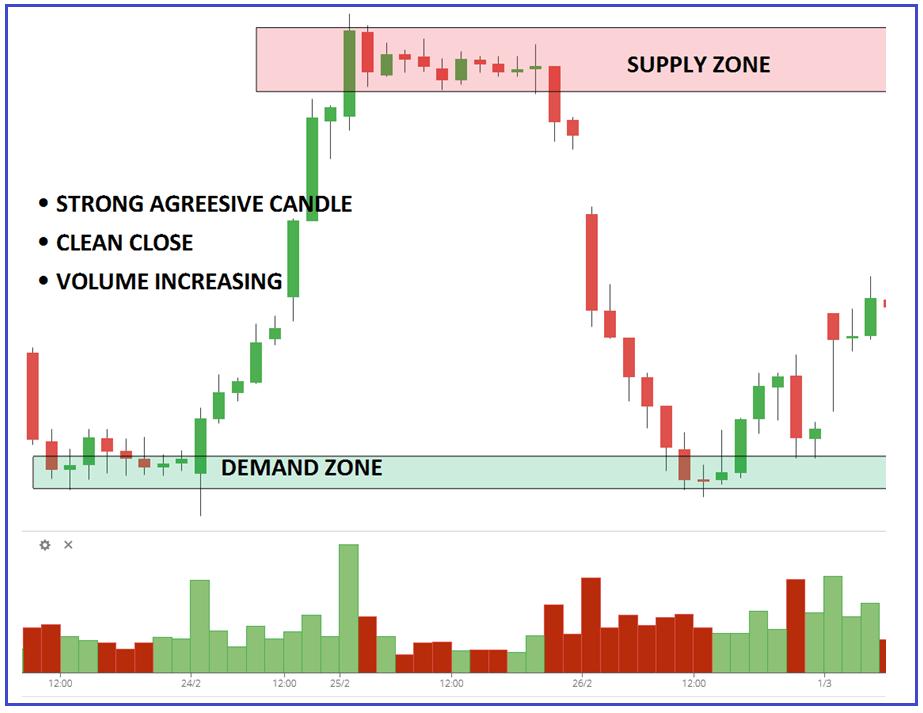
- Demand Zone: Area where buyers are strong and price moves up
- Supply Zone: Area where sellers are strong and price drops
These zones represent institutional activity — banks and large traders placing big orders.
Why Demand and Supply Works
Markets move because of imbalance between buyers and sellers. When demand exceeds supply, price rises. When supply exceeds demand, price falls.
Smart traders identify these imbalances early and trade with institutions instead of against them.
How to Identify Demand and Supply Zones
1. Look for Strong Moves
Find areas where price made a strong move upward or downward with little consolidation.
2. Identify the Base
The base is the area before a strong move. This is where institutions accumulate positions.
3. Mark the Zone
Draw a rectangle covering the base and the start of the move.
Types of Zones
- Rally → Base → Rally (Demand)
- Drop → Base → Drop (Supply)
- Rally → Base → Drop (Reversal)
- Drop → Base → Rally (Reversal)
Best Strategy Using Demand and Supply
Step 1: Wait for Price to Return
Do not chase the market. Wait for price to come back to the zone.
Step 2: Confirm Entry
Look for:
- Strong rejection candles
- Low timeframe structure break
Step 3: Set Stop Loss
Place stop loss slightly outside the zone.
Step 4: Target Profit
Target next demand/supply zone or use 1:2 risk-reward ratio.
Common Mistakes to Avoid
- Trading every zone blindly
- Ignoring trend direction
- No proper risk management
- Entering too early
Pro Tips
- Fresh zones work better than tested ones
- Higher timeframe zones are stronger
- Combine with volume or structure
Conclusion
Demand and supply trading is a powerful way to understand market movements. With practice and discipline, it can significantly improve your trading performance.
Start simple, focus on quality setups, and always manage your risk.